
Portable ECG: Empowering Heart Health Monitoring On-the-Go

A portable ECG, also called an EKG monitor, can record a short trace of the heart’s electrical activity outside a clinic. For some people, a recording made when symptoms occur may be useful to share with a healthcare professional. It is not a way to prevent heart disease, diagnose every cardiac condition or decide that urgent symptoms are safe to ignore.

Why People Look at Heart Rhythm
Heart conditions have many causes and risk factors, including blood pressure, smoking, cholesterol, diabetes, activity level, age and family history. A portable ECG records an electrical signal over a short period; it does not assess every aspect of heart health. Blood pressure checks, clinical tests and a discussion of symptoms may be needed for a broader assessment.

What a Portable ECG Can Record
An ECG trace reflects electrical activity during the recording window. Some devices display an estimated heart rate and allow a trace to be saved or shared. Depending on the device’s intended use, software may flag certain rhythm patterns for review. A short recording can miss intermittent events, and an automated label is not a clinician’s diagnosis.
Symptoms such as palpitations, breathlessness, unusual fatigue, swelling or reduced exercise tolerance can have different causes. If they are new, persistent or worsening, discuss them with a healthcare professional rather than interpreting a single ECG yourself.

Features Worth Comparing
- How a recording is taken: check electrode contact points, the recording duration and whether it can capture a trace when symptoms happen.
- Display and storage: some models have their own screen; others depend on an app. Check how many records can be stored and exported.
- Compatibility and cost: confirm the supported phone or computer system, account requirements and any subscription charges for the specific version.
- Intended use and evidence: review the product’s instructions and market-specific regulatory documentation for the exact model and any automated interpretation claims.
- Practical handling: consider grip, battery replacement or charging, data privacy and the ease of sharing a trace with a clinician.


Examples of Different Device Styles
The products below appeared in the original comparison. Their older star ratings, prices and app compatibility were not verified for today, so compare current specifications with the manufacturers before buying. A fitness tracker that displays a heart-rate estimate should not automatically be treated as a clinical ECG device.
KardiaMobile One-Lead Monitor


A compact phone-connected design may be easy to carry, but the experience depends on a compatible device and the current app. Check which recordings and interpretations are included without a subscription.
KardiaMobile Six-Lead Monitor

Models that use more contact points may capture additional electrical views, but correct positioning and supported software still matter. More leads do not make a home reading a complete cardiac assessment.
Fitness Tracker Style


Check whether a wearable measures heart rate, records an ECG trace or estimates other values. These are different functions, and their clinical uses and limitations differ.
EMAY Handheld ECG Monitor


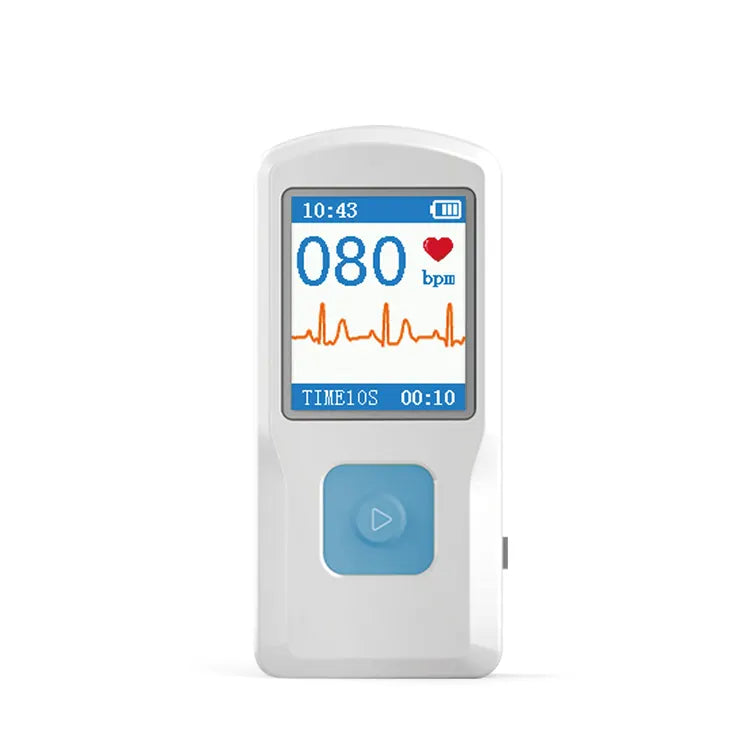
A built-in display can allow a recording without opening a phone app. Confirm whether data export, multiple-user storage and interpretation features are supported on the exact model. A handheld unit is not automatically a 12-lead ECG.
MedAsia Portable ECG and Wholesale Questions

The original MedAsia overview described a portable unit for short rhythm recordings, a display and possible data-transfer options. Features such as Bluetooth, USB, battery life, storage and software access can vary by variant. Ask for the current specifications and instructions for the actual model rather than assuming that every function is included or free.
For a wholesale enquiry, confirm minimum quantity, sample availability, branding options, packaging dimensions, delivery estimate and payment terms in a current quotation. Request device-specific documents for the destination market. A generic “CE, ISO or FDA certified” statement does not establish a particular model’s status or guarantee its clinical performance.

Recording and Caring for a Device
Follow the exact model’s instructions for electrode contact, recording positions, duration and data transfer. Make a note of when symptoms occurred if a clinician has asked you to record an episode. An automated interpretation or a normal-looking trace should not be used to dismiss symptoms.


Keep the device dry, inspect its contacts and casing, and clean and store it according to the manufacturer’s instructions. Do not open or repair it unless authorized. Battery charging, operating limits and disposal requirements differ by model, so use the supplied manual rather than treating the older figures in this article as universal instructions.
For device questions, contact MedAsia at info@medasiagroup.com. For symptoms or interpretation of a trace, speak with a healthcare professional.
WE RECOMMEND


Related posts


- Subscribe MedInsights
- Subscribe MedInsights
- Subscribe MedInsights
- Subscribe MedInsights
- Subscribe MedInsights