
EU USB-C Rules: What They Mean for Healthcare Devices

The EU’s common-charger rules introduced USB-C requirements for specified categories of radio equipment. They do not mean that every electronic device or every home healthcare product sold in the EU must have a USB-C port. For blood pressure monitor manufacturers, the first question is whether a particular product falls within the categories and conditions covered by the rules.

What Does the EU Common-Charger Directive Cover?
Directive (EU) 2022/2380 amended the EU Radio Equipment Directive to introduce a common charging solution for listed device categories. The original article named handheld mobile phones, tablets, digital cameras, headphones, headsets, portable speakers, handheld video-game consoles, e-readers, earbuds, keyboards, mice and portable navigation systems, with application dates beginning in 2024. It also noted a later 2026 date for laptops.
Those dates and categories must be interpreted under the legislation’s conditions, including whether equipment is rechargeable by wired charging. The rule is not a blanket mandate for all electronics. Manufacturers should check the current official text for the precise scope and application date relevant to a product.

The policy aims to make compatible charging easier for consumers and reduce unnecessary chargers and electronic waste. The original article quoted estimates of 11,000 tonnes less electronic waste and €250 million in annual consumer savings. These figures need a current, identifiable source before being reused as verified outcomes.
Does This Automatically Apply to Blood Pressure Monitors?
No automatic conclusion follows from a product being a home health device. A blood pressure monitor’s power source, radio functions and product classification should be evaluated against the exact legal scope. A device that uses USB-C may offer convenience without that feature proving compliance with the common-charger directive or medical-device rules.

Common Power Options for BP Monitors
Depending on the model, a blood pressure monitor may use replaceable batteries, a DC power input, Micro-USB or USB-C. These are product-design options, not four mandatory charging methods. USB-C has a reversible connector; supported charging power and data transfer depend on the device and its implementation.

If you are comparing blood pressure monitors, check each model’s listed power options and accessories instead of assuming all monitors support the same port.
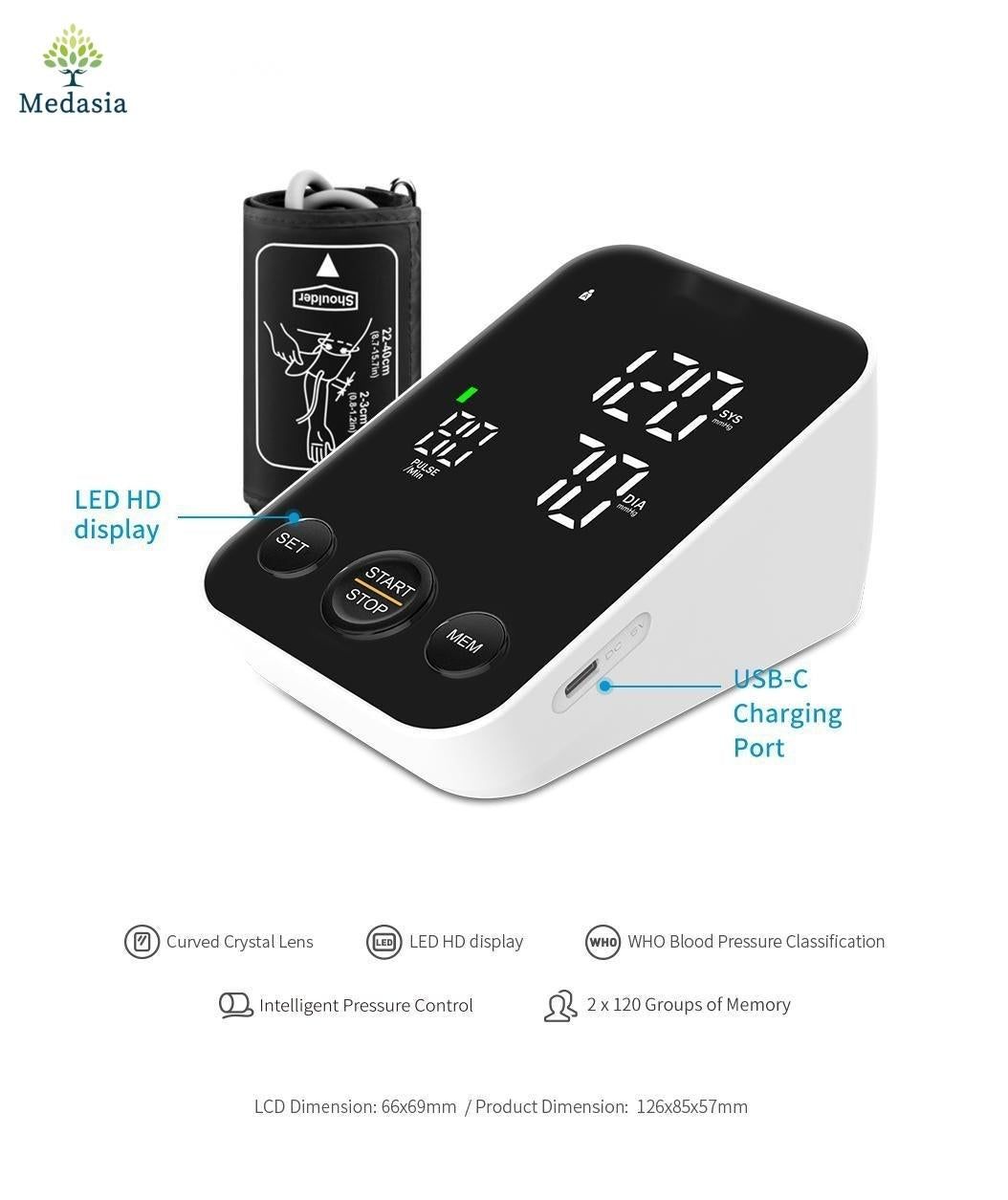
For an OEM enquiry about a blood pressure monitor with USB-C, contact info@medasiagroup.com. Confirm the product’s actual specifications and relevant EU requirements before making a regulatory or charging-performance claim.
WE RECOMMEND



Related posts


- Subscribe MedInsights
- Subscribe MedInsights
- Subscribe MedInsights
- Subscribe MedInsights
- Subscribe MedInsights