
Mesh vs Compressor Nebulizers: A Sourcing Guide for Distributors

Choosing between a mesh nebulizer vs compressor nebulizer is one of the first assortment decisions every respiratory-care distributor faces — and it is really a margin decision, not a clinical one. Both technologies deliver aerosolized medication effectively; what differs is your landed cost, return rate, freight bill, target channel, and private-label potential. This guide compares the two technologies from a buyer's perspective so you can brief factories, negotiate specs, and build a SKU mix that actually sells through in your market.
Why This Comparison Matters for Your Bottom Line
End users compare noise levels and portability. You, as a distributor or private-label buyer, need to compare different numbers:
- Ex-works cost and MOQ — how much cash each SKU ties up per container
- Warranty and failure rates — what your after-sales reserve should look like
- Transit survival rate — how many units arrive dead on arrival
- Regulatory pathway — which certifications your target market demands for each class
- Customization headroom — how much differentiation you can build into a private-label line

How the Two Technologies Work (in Sourcing Terms)
You do not need an engineering degree, but you do need enough technical vocabulary to audit a factory's spec sheet and push back on inflated claims.
Compressor (Jet) Nebulizers
A piston compressor pushes pressurized air through a liquid medication cup, breaking it into droplets. The technology is mature, the component supply chain is commoditized, and almost every mid-size factory in China's respiratory corridor can build one. The key components that drive cost and quality are the compressor pump itself (oil-free piston vs. diaphragm), the nebulizer cup design, and the motor duty cycle.
Mesh (Vibrating Mesh) Nebulizers
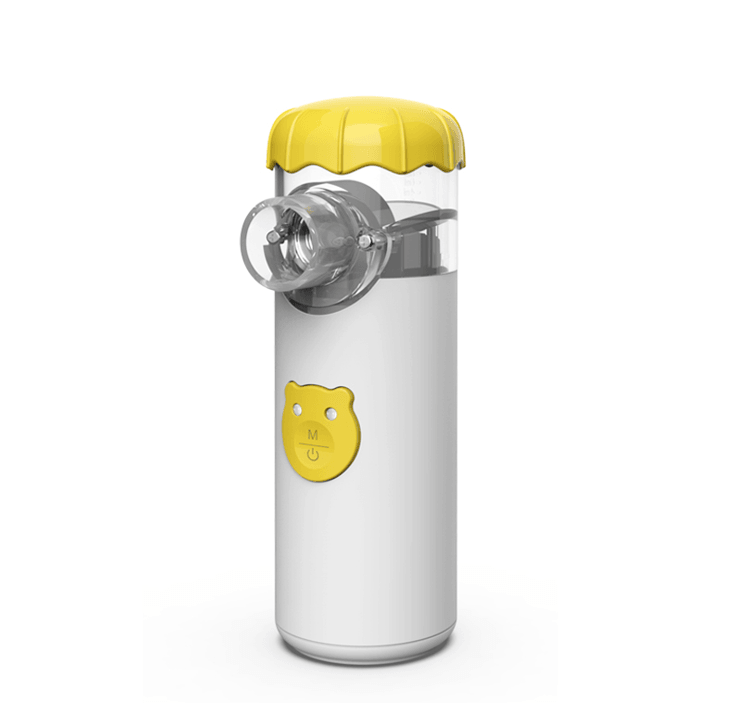
A piezoelectric element vibrates a fine metal or polymer mesh — typically a plate with 1,000+ laser-drilled apertures of 3–5 microns — pushing medication through the holes to generate a uniform fine-particle aerosol. The mesh plate is the heart of the device and the single biggest quality variable. Premium factories source precision-etched mesh with tight aperture tolerance; budget lines use cheaper mesh that clogs faster and drifts in particle size over its service life.

Cost and Reliability: A Procurement Comparison
The table below reflects indicative ex-works ranges and field data we see across the verified factories in our network. Actual quotes vary with order volume, spec tier, and accessory packages — treat these as negotiation baselines, not fixed prices.

Two lines in that table deserve extra attention:
- Freight. A compressor nebulizer takes roughly five times the carton volume of a mesh unit. At current sea-freight rates, logistics can add US$1.50–3.00 to your landed cost per compressor unit — often the deciding factor for e-commerce sellers shipping direct.
- Failure mode. Compressor units fail loudly (motor noise, weak output) and early in life, so defects surface inside your warranty window. Mesh units fail silently through gradual mesh clogging, which surfaces as complaints six months in. Your warranty reserve and spare-parts strategy should reflect that difference.

Want a landed-cost model for your target market? We can quote both technologies from multiple verified factories so you can compare real numbers side by side. Request a Quote
Target Markets and Channels: Where Each Technology Wins
Compressor Nebulizers Win In:
- Pharmacy and drugstore retail — price-sensitive shelf space where a US$25–35 retail price point moves volume
- Institutional tenders — hospitals, clinics, and public health procurement in emerging markets specify compressor units for durability and shared-patient use with disposable cups
- Home-care and DME channels — insurers and rental providers favor repairable devices with long service life
- Emerging markets — Africa, South Asia, and parts of Latin America where price beats portability and power banks are less relevant
Mesh Nebulizers Win In:
- E-commerce and Amazon-style marketplaces — light weight slashes FBA and last-mile costs; silent operation and portability photograph well and drive reviews
- Premium pharmacy and travel retail — the "nebulizer in your pocket" positioning supports US$60–100 retail pricing
- Pediatric and asthma lifestyle segments — parents pay for quiet, fast treatments
- Developed markets — EU, North America, Japan, and the Gulf states, where buyers trade up for convenience

A mid-size European distributor we work with runs exactly this split: a compressor line under their economy brand for pharmacy chains, and a mesh line under a premium sub-brand sold online at 2.5x the price. Same sourcing partner, two factories, two margin profiles. That portfolio approach is the norm among our mature accounts, not the exception.
Private Label and OEM Customization: What You Can Actually Change
Both technologies support private label, but the customization levers differ. You can browse our medical nebulizer range when shortlisting models for your brand.
Compressor Units — Customization Levers
- Housing and colorways — tooling already exists at most factories; color and logo changes cost little and rarely affect MOQ
- Accessory bundles — adult/pediatric masks, mouthpieces, spare cups, carry bags; bundling is the cheapest way to differentiate on a retail shelf
- Packaging — full-color retail boxes and multilingual IFUs are standard OEM scope
- Performance tuning — limited; you can spec airflow rate and nebulization rate within the pump's capability, but the core performance ceiling is set by the compressor platform

Mesh Units — Customization Levers
- Nebulization rate and particle size (MMAD) — premium factories can tune the mesh and drive circuit to hit a specified MMAD window (commonly 3–5 μm); get this into your spec sheet and verify it in pre-shipment testing
- Mesh plate quality tier — this is where cheap quotes hide cost; always ask for the mesh plate's rated lifespan (treatments) and aperture tolerance, and write a replacement-plate supply commitment into your contract
- Power design — USB-C rechargeable vs. AA batteries changes both cost and channel fit; rechargeable suits premium e-commerce, replaceable batteries suit institutional and travel channels
- Industrial design — mesh units have real ID differentiation potential (shape, weight, one-button operation); expect NRE tooling fees of US$8,000–25,000 for a fully custom enclosure, amortized over your first runs
- Smart features — some platforms support Bluetooth usage tracking; only worth it if your brand strategy monetizes the app layer

Regulatory and Certification Differences
Both device classes are typically Class IIa (EU MDR) or Class II (US FDA) respiratory devices, but the compliance workload is not identical.
- Shared requirements: ISO 13485 quality system at the factory, biocompatibility data for patient-contacting materials, electrical safety (IEC 60601-1) and EMC (IEC 60601-1-2) testing for powered units, and market-specific registration (CE marking under MDR, FDA 510(k) for the US).
- Mesh-specific scrutiny: regulators and notified bodies pay closer attention to particle-size distribution data and mesh durability testing, because performance degrades over the product's life. Expect requests for aerosol performance test reports (often to ISO 27427) at both registration and audit stages.
- Compressor-specific scrutiny: duty-cycle and thermal testing matter more; a pump rated for 20 minutes on / 40 minutes off will fail institutional use claims.
- Battery-powered mesh units add UN 38.3 lithium battery transport certification and, for the US, additional FDA electrical safety review.

The practical takeaway for buyers: compressor files are generally faster and cheaper to register, while mesh files carry more performance-testing evidence. If you are entering a tightly regulated market for the first time, a compressor line is the lower-risk beachhead; mesh is the follow-up margin play once your regulatory pipeline is running.
Our team — trained as ISO 13485 internal auditors — reviews factory quality systems and test documentation before you commit, so certification gaps surface in the sourcing phase rather than after your deposit. Request a Quote to discuss your target market's requirements.
Building Your SKU Mix: A Portfolio Strategy
Most successful distributors we support do not choose one technology — they sequence them:
- Launch with a compressor hero SKU at a competitive retail price to win pharmacy shelf space and institutional accounts. It is forgiving: cheap to ship replacements for, easy to service, and acceptable to nearly every regulatory regime.
- Add a mesh premium SKU 6–12 months later targeting e-commerce and travel/pediatric segments, where margins per unit are 40–80% higher and freight economics favor you.
- Standardize accessories across both lines (masks, cups, filters) so your spare-parts inventory and re-order logistics stay simple.
- Negotiate mesh plate supply as a consumable program — committed pricing on replacement plates turns your installed base into recurring revenue.
For a broader assortment beyond respiratory care, explore home health testing devices for your portfolio. Think of the compressor unit as your traffic product and the mesh unit as your profit product. The distributors who struggle are the ones who launch five SKUs of both technologies at once and drown in MOQ commitments.

How a Sourcing Partner De-Risks This Decision
Comparing mesh nebulizer vs compressor nebulizer spec sheets from Alibaba listings is not the same as comparing verified factories. As a sourcing partner — not a factory — MedAsia works on your side of the table: we shortlist certified manufacturers for both technologies, benchmark quotes against current market data, audit quality systems, manage your private-label development, and inspect goods before shipment. You keep one accountable partner instead of juggling five supplier relationships. Learn more about our sourcing and OEM coordination services.
Frequently Asked Questions
01.Which is better for distributors: mesh or compressor nebulizers?
02.What is the typical MOQ for mesh nebulizers from Chinese factories?
03.Are mesh nebulizers harder to certify than compressor models?
04.What private-label customization is possible for nebulizers?
05.How do I verify nebulizer quality before shipment from China?
WE RECOMMEND


Related posts


- Subscribe MedInsights
- Subscribe MedInsights
- Subscribe MedInsights
- Subscribe MedInsights
- Subscribe MedInsights