
OEM vs ODM Medical Devices: What's the Difference for Importers?


Choosing the right medical device sourcing partnership.
If you are sourcing medical devices from Asia, you will run into the terms OEM and ODM within your first week. Choosing between OEM vs ODM medical devices is one of the most consequential decisions an importer makes — it shapes your unit cost, your lead time, your intellectual property position, and how much control you keep over your own product line. Yet the two models are constantly confused, even by experienced buyers.
Here is the short answer. In OEM (Original Equipment Manufacturing), you provide the product design and specifications, and a factory builds the device to your exact requirements. In ODM (Original Design Manufacturing), the factory already owns a finished product design, and you buy it — usually with your branding applied. OEM gives you control and IP; ODM gives you speed and lower upfront cost.
That 60-word summary covers the basics. But the details — especially around private label, white label, and intellectual property — are where importers most often make expensive mistakes. This guide breaks down each model, compares them side by side, and helps you decide which path fits your business.
What Is OEM in Medical Device Sourcing?

Production checks support consistent device quality.
OEM stands for Original Equipment Manufacturing. In this model, the buyer — that is, you or your brand — owns the product concept and provides the factory with detailed specifications: dimensions, materials, performance targets, firmware behavior, packaging artwork, labeling, and regulatory documentation requirements.
The factory's job is execution. It sources components, sets up production lines, runs quality control against your specification, and ships the finished goods. A well-run OEM project for a device like a Portable Digital Bluetooth Spirometer or a nebulizer compressor involves months of specification review, tooling, pre-production samples, and validation before the first mass-production run.
What OEM typically involves for the buyer:
Writing a complete technical specification (or paying an engineer to write one)
Approving prototypes and pre-production samples, often through multiple rounds
Funding custom tooling, molds, or packaging plates
Owning — or at least controlling — the regulatory submission file in your target market
Committing to longer lead times, commonly 60 to 120 days for a first order
The payoff is exclusivity and control. Your device performs the way you specified, looks the way you designed, and cannot legally be sold to your competitor in the same form.
What Is ODM in Medical Device Sourcing?
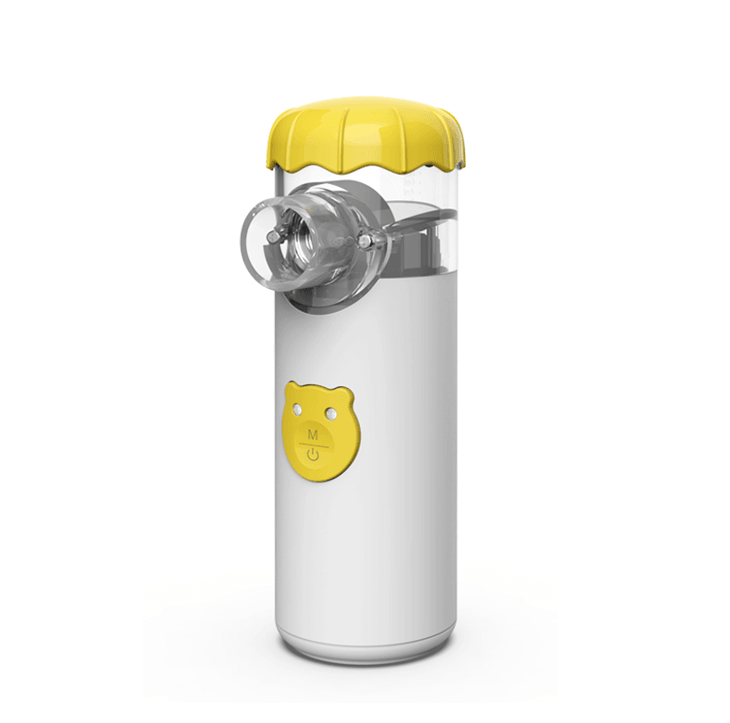
ODM stands for Original Design Manufacturing. Here, the factory has already designed, engineered, and usually certified a product. It sits in their catalog — a digital pregnancy and ovulation test, a mesh nebulizer, a hemoglobin meter — and you select it, apply your brand name and packaging, and import it.

ODM starts with an existing product design.
Because the design work is done, ODM is dramatically faster and cheaper to start. There is no tooling to fund, no prototyping cycle, and in many cases the factory already holds certifications such as CE marking under the EU MDR or has a device listed with the U.S. FDA. Lead times of 30 to 45 days are common.
What ODM typically involves for the buyer:
Selecting a product from a factory's existing range
Customizing branding elements: logo, color, packaging, user manual language
Verifying that the factory's existing certifications cover your sales market
Negotiating minimum order quantities, which are usually lower than OEM
Accepting that the same base product may be sold to other buyers under different brands
That last point is the strategic trade-off. Your "exclusive" ODM nebulizer may be functionally identical to one sold by a competitor in a neighboring country.
OEM vs ODM Medical Devices: Side-by-Side Comparison

Key differences between OEM and ODM sourcing.
Explore Our OEM & ODM Project Experience
With over 15 years of medical device sourcing experience, MedAsia Healthcare supports both OEM product development and ODM sourcing projects. From product redesign and customization to sourcing coordination and product line expansion, we've helped international healthcare brands bring their projects to market.
Explore Our Case Studies →
Where Do Private Label and White Label Fit In?
These two terms get tangled up with OEM and ODM, so let us separate them cleanly.
Private label means a product manufactured by a third party and sold exclusively under your brand. In medical devices, private label programs are usually built on an ODM base product but with exclusivity clauses — for example, the factory agrees not to sell that exact configuration to other buyers in your territory. Private label sits between pure ODM and full OEM in terms of both cost and control.
White label means a generic product sold to many buyers with minimal differentiation — essentially the purest form of ODM. A white-label pulse oximeter might carry dozens of different brand names worldwide.

One base product, different branding options.
A useful way to think about it: OEM and ODM describe who designed the product. Private label and white label describe how the product is branded and distributed. A European distributor we worked with learned this distinction the hard way — they believed their "private label" cholesterol meter was exclusive, only to discover the identical device, in different colors, listed by a competitor at a trade fair. Their contract had never included an exclusivity or territorial clause. The fix was a renegotiated agreement with defined market protection, but the episode cost them a season of price competition they could have avoided.
Intellectual Property: The Difference That Matters Most
For medical device importers, the IP gap between OEM and ODM is not academic — it determines who can stop whom from selling what.
Under OEM, you should own the industrial design, the tooling, and any custom firmware, provided your manufacturing agreement says so explicitly. Without a written IP assignment clause, some jurisdictions default tooling ownership to the party that paid for it — but enforcement across borders is difficult. Get it in writing, in a language and legal framework you can enforce.

Clarify IP ownership and exclusivity in writing.
Under ODM, the factory owns the design. What you can own is your brand, your packaging artwork, and — if negotiated — territorial exclusivity. You cannot patent a product you did not design, and you cannot stop the factory from selling the same device elsewhere unless your contract says otherwise.
One practical note on regulatory IP: under the EU MDR, the legal manufacturer named on the device has specific obligations. Many ODM arrangements name the buyer as the legal manufacturer, which transfers regulatory liability to you even though you did not design the product. Understand exactly which role you are accepting before you sign.
Which Model Is Right for Your Business?
There is no universal answer, but there are reliable patterns.
Choose OEM if you:
Have an established brand and distribution network
Need a differentiated product to defend margin against competitors
Can fund tooling and absorb longer lead times
Plan to sell the product for three or more years, amortizing the upfront cost
Choose ODM if you:
Are testing a new market or product category
Need to launch quickly, for example to meet a tender deadline
Have limited upfront capital for tooling
Compete on distribution strength and service rather than product uniqueness
Choose a structured private label program if you want ODM speed with contractual exclusivity — and are willing to commit to meaningful order volumes to earn it.
Many importers run a hybrid strategy: ODM products to generate cash flow and market presence, with one or two OEM hero products that define the brand.

Match your sourcing model to your business goals.
A North American importer of home health test devices, for example, sources standard ODM meters across several categories while investing in a single OEM device with proprietary connectivity features — the combination gives them both breadth and a defensible flagship.
How a Sourcing Partner Simplifies Either Path
Whether you choose OEM or ODM, the hard part is rarely the concept — it is execution across language, time zones, and quality systems. Which factories actually hold valid ISO 13485 certification rather than just claiming it? Which ODM catalogs are genuinely certified for your market? How do you enforce an IP clause written into a contract with a supplier ten thousand kilometers away?
This is where a sourcing partner earns its fee. MedAsia Healthcare, based in Hangzhou, has spent more than 15 years helping overseas distributors, importers, and private label buyers identify qualified factories, verify their certifications, manage sample approval, and coordinate both OEM development projects and ODM private label programs. Our team is trained as ISO 13485 internal auditors, which means we can evaluate a factory's quality system from the inside — before you commit a purchase order.
If you are weighing an OEM project against an ODM catalog, we can help you compare real quotes, real certifications, and real lead times from vetted suppliers. Request a Quote and tell us which model you are considering — we will map the options for your specific product category.

Connecting with buyers at a medical trade show.
Frequently Asked Questions
01. What is the main difference between OEM and ODM medical devices?
In OEM, the buyer provides the product design and specifications, and the factory manufactures to those requirements — the buyer owns the design. In ODM, the factory owns a ready-made product design, and the buyer purchases it, typically with their own branding applied. OEM offers control and exclusivity; ODM offers speed and lower upfront cost.
02. Is ODM cheaper than OEM for medical devices?
ODM is cheaper to start because there is no tooling, engineering, or prototyping cost — you pay mainly for branding and packaging customization. However, OEM unit costs at scale are often lower, and OEM eliminates the risk of competitors selling an identical product. Total cost depends on your volume and time horizon.
03. Can I get exclusive rights to an ODM medical device?
Sometimes, through a private label agreement. Factories may grant territorial or configuration exclusivity in exchange for committed order volumes. This must be written into your contract explicitly — verbal assurances are unenforceable. Without an exclusivity clause, the factory can sell the same device to any other buyer.
04. Who is responsible for regulatory compliance in ODM sourcing?
It depends on who is named the legal manufacturer. Under EU MDR, if your company is the legal manufacturer on the label, you carry the regulatory obligations even though the factory designed the device. Always clarify regulatory roles, technical documentation access, and post-market responsibilities in writing before placing an order.
05. How long does an OEM medical device project take?
A typical OEM project runs 60 to 120 days for a first production order, including specification review, prototyping, sample approval, and tooling. Complex devices or those requiring new regulatory submissions can take six months or longer. ODM orders, by contrast, commonly ship within 30 to 45 days.
06. Should a new importer start with OEM or ODM?
Most new importers should start with ODM or private label. The lower upfront cost and faster lead time let you test market demand with limited risk. Once a product category proves itself, investing in an OEM version with differentiated features becomes a justified, lower-risk decision backed by real sales data.
Ready to compare OEM and ODM options for your next product line? Request a Quote and our team will respond with qualified supplier options for your category.
RECOMENDAMOS


Artículos relacionados


- Suscríbase a MedInsights
- Suscríbase a MedInsights
- Suscríbase a MedInsights
- Suscríbase a MedInsights
- Suscríbase a MedInsights